Risk & Stability
What Could Silently Break Your Business?
The biggest risks are usually invisible until it's too late. Customer concentration, key person dependency, and documentation gaps don't feel urgent until they become emergencies.
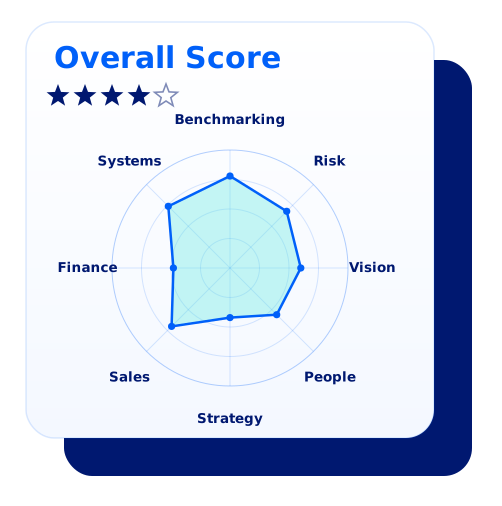
Risk Assessment
2 areas need immediate attention
The risks you don't see are the ones that kill businesses
Most owners are so focused on growth and daily operations that they don't think about risk until it materializes. But by then, options are limited and costs are high.
A single customer leaving, a key employee quitting, or an operational failure can undo years of work. The time to address these risks is before they happen.
Without sufficient cash reserves and planning, even a short disruption can put a business at risk.
Most of these crises were predictable and preventable with proper planning.
Hidden Risks in Your Business
Do any of these sound familiar?
Your biggest customer is 35% of revenue
If they leave, you're immediately unprofitable. Layoffs or closure may follow.
Safe threshold: No single customer should exceed 15-20% of revenue.
Only one person knows how to do a critical task
Vacation, illness, or departure creates immediate operational crisis.
Safe threshold: Every critical process needs at least two people who can perform it.
No documented processes or SOPs
Training takes forever, quality is inconsistent, scaling is impossible.
Safe threshold: Core processes should be documented enough for someone new to follow.
Key vendor with no backup
If they fail, raise prices, or end the relationship, you're stuck.
Safe threshold: Have identified alternatives for any vendor critical to operations.
Areas of Business Risk
A comprehensive risk assessment examines all of these areas to identify vulnerabilities.
Customer Concentration
When too much revenue comes from too few customers, you're one phone call away from crisis.
Key Person Dependency
Critical knowledge or relationships concentrated in one person creates fragility.
Documentation Gaps
Undocumented processes create chaos when key people leave or emergencies arise.
Operational Fragility
Single points of failure in systems, vendors, or processes that could halt operations.
Financial Vulnerability
Thin margins, high debt, or insufficient reserves leave no room for error.
Compliance & Legal
Regulatory, contractual, or legal exposures that could result in significant liability.
Pattern We See
Customer concentration is one of the most common hidden risks we encounter. Businesses that proactively diversify before a major customer leaves are in a far stronger position than those who react after.
Frequently Asked Questions

Identify Your Hidden Risks
Don't wait for a crisis to discover your vulnerabilities. Get a comprehensive risk assessment and address threats before they materialize.