Growth Strategy
How Do I Grow Again?
Growth stalls are predictable and fixable when you understand the system. Diagnose your growth engine and identify the specific levers that will get you moving again.
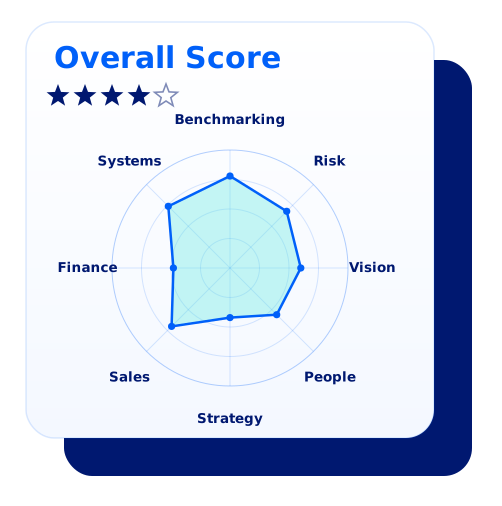
Growth Engine Health
Retention is your growth bottleneck
Most growth problems aren't about working harder
You've probably tried: more marketing, more sales calls, longer hours. But if you're stuck, the problem isn't effort. It's strategy.
Growth stalls happen when something in your business model changes or when you've hit the natural ceiling of your current approach.
Most small businesses stop growing long before they reach their potential.
The difference between those who break through and those who stay stuck is understanding why growth stalled.
Common Growth Stall Patterns
Which one sounds like your situation?
The Founder Ceiling
Growth stalled because everything still runs through you. You're the bottleneck.
The fix: Build systems and delegate to break the dependency.
The Market Saturation Trap
You've captured your initial market but haven't expanded to new segments.
The fix: Identify adjacent markets or customer segments to pursue.
The Retention Leak
You're acquiring customers but losing them almost as fast.
The fix: Focus on customer success and reducing churn before adding more acquisition.
The Pricing Problem
You haven't raised prices in years while costs have increased.
The fix: Implement value-based pricing and regular price reviews.
The Six Growth Levers
Every business has the same fundamental levers. The question is which one will have the biggest impact for you right now.
Market Expansion
Identify new customer segments, geographies, or channels to reach untapped demand.
Customer Retention
Increase lifetime value by reducing churn and deepening existing relationships.
Pricing Optimization
Capture more value through strategic pricing adjustments and packaging.
Product/Service Expansion
Add offerings that serve existing customers better or attract new ones.
Sales Effectiveness
Improve conversion rates, shorten sales cycles, and increase deal sizes.
Operational Leverage
Scale revenue faster than costs through systems and process improvements.
Pattern We See
When growth stalls, the instinct is to chase more: more marketing, more products, more channels. But most businesses already have growth opportunities sitting in front of them. The real work is deciding which one deserves full focus.
Frequently Asked Questions

Find Your Path to Growth
Stop guessing which lever to pull. Get a clear diagnosis of what's holding you back and a prioritized plan to break through.